FRP Sectional Water Tank
The standard template block sizes of water tanks are 1 m*1m. 1m*0.5m, 0.5m*0.5m;
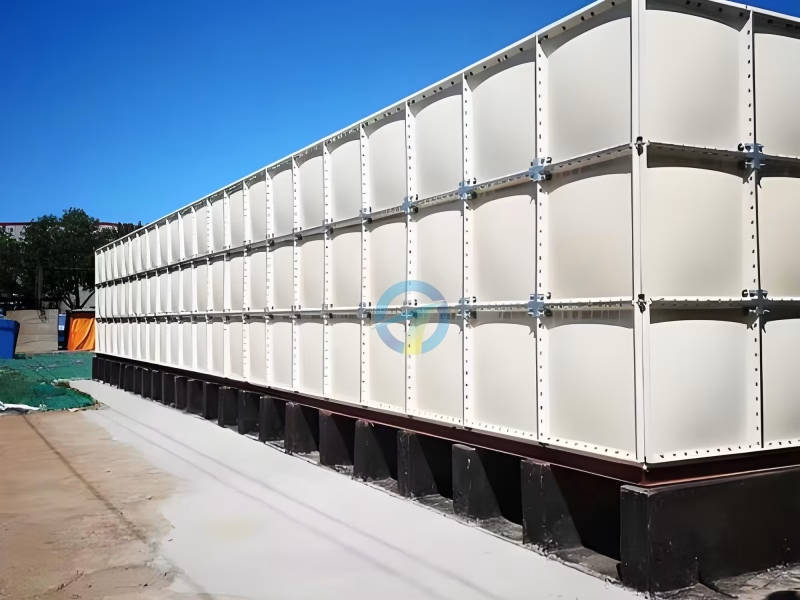
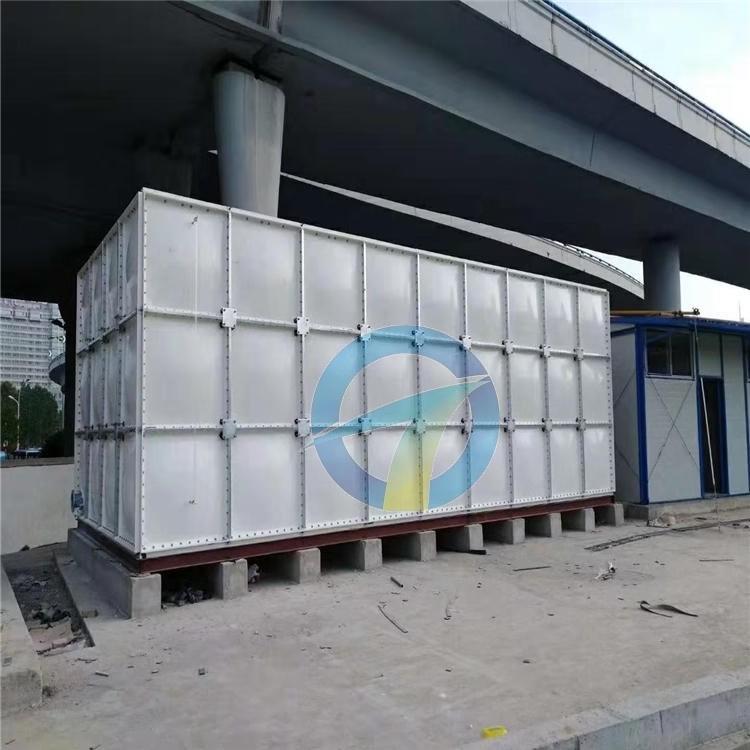
Our FRP sectional water tank is assembled with high-quality Fiberglass Reinforced Plastic (GRP / SMC) panels. Standard panel specifications include 1m×1m, 1m×0.5m and 0.5m×0.5m. Flexible panel combinations enable custom tank capacities to satisfy diverse on-site project requirements.
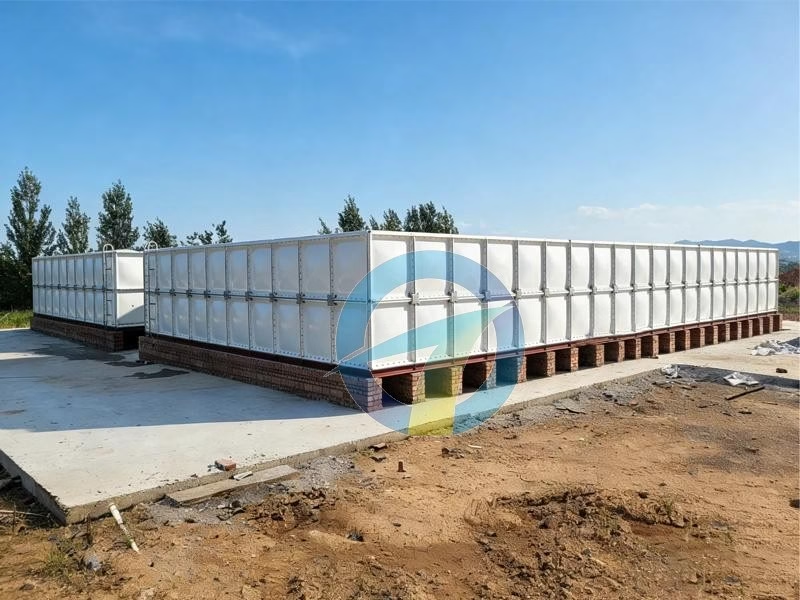
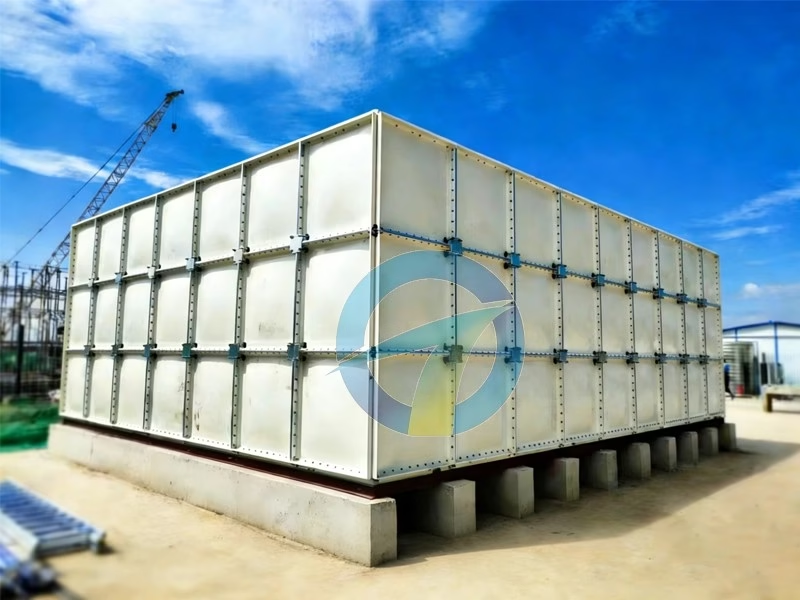
The foundation for FRP sectional water tanks shall be constructed in accordance with relevant industry standards. The flatness tolerance of the foundation surface is controlled within 5mm. The foundation layout matches the overall tank footprint. The center-to-center distance between adjacent foundations shall not exceed 1000mm, and each concrete foundation has a minimum width of 240mm.
10# channel steel is adopted as the standard tank base. For large-capacity FRP sectional tanks, heavier channel steel can be selected to boost load-bearing capacity. All connecting bolts and fittings are anti-corrosion treated. Internal tie rods are equipped to secure structural stability under hydraulic pressure.
FRP sectional water tanks are widely deployed in hot climate regions, including the Middle East, Africa, Southeast Asia, islands and coastal zones. Compared with conventional steel or concrete water tanks, our FRP tanks greatly cut rust-related maintenance costs and simplify overseas container shipment.
Why FRP Sectional Water Tanks Are Ideal for Hot Climate Projects
- Excellent Corrosion Resistance: GRP panels will never rust like carbon steel tanks. They perform reliably under high-temperature, humid, salt-spray coastal and corrosive environments.
- Lightweight Panel Structure: FRP panels are far lighter than metal or concrete alternatives, lowering the difficulty of ocean transport and on-site handling.
- Flexible Installation: Bolt-connected modular panels can be installed on rooftops, basements and other indoor & outdoor sites with space constraints.
- Adapt to Severe Outdoor Environments: Insulated FRP water tanks are available for projects under intense direct sunlight.
- Low Maintenance: No repainting or anti-rust treatment is required for humid and coastal locations.
Tank Structure
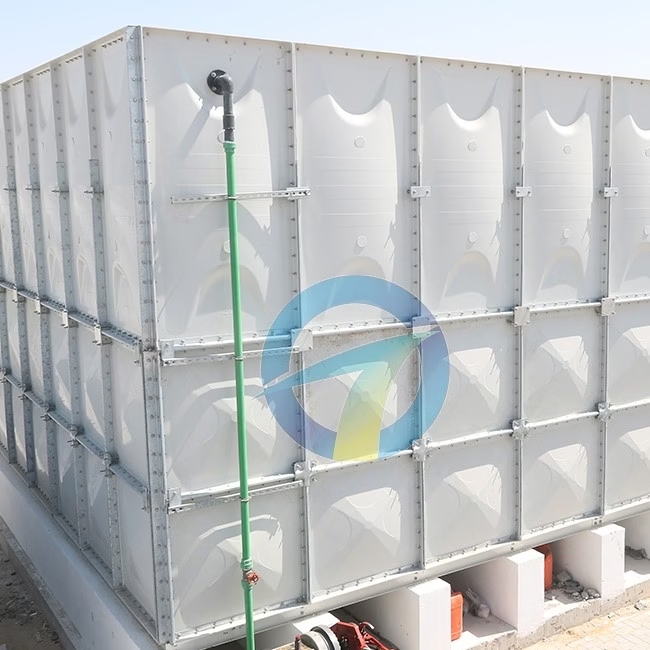
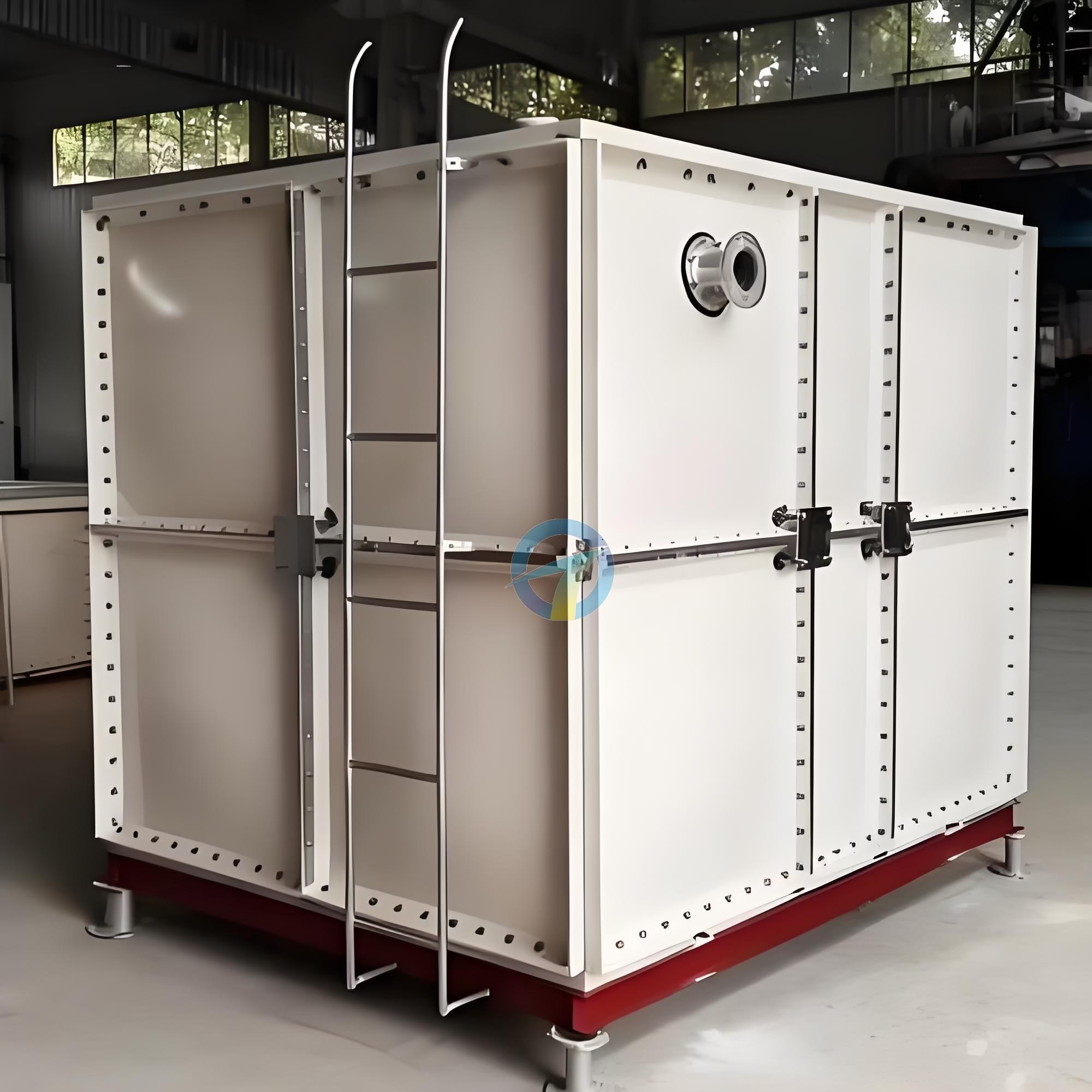
The FRP water tank consists of molded SMC GRP panels, sealing gaskets, connecting bolts, reinforcing components, roof panels, manholes, inlet, outlet, overflow and drain fittings. This panelized design keeps stored water isolated from rust-prone metal parts, making it suitable for potable water, general water storage and various overseas construction projects.
- FRP / SMC molded panel: Main tank shell, corrosion-resistant & lightweight
- Sealing gasket: Ensures watertight sealing between panels
- Bolts & nuts: Fasten panels during field assembly
- Internal & external reinforcement: Maintain tank stability under water pressure
- Roof panel: Protect stored water from external contamination
- Manhole: For routine inspection and maintenance access
- Inlet / Outlet / Overflow / Drain ports: Water intake, discharge and draining
Drinking & Food-Grade Water Storage
Our FRP water tanks support drinking water and food-grade clean water storage. Widely applied in residential water supply, commercial buildings, hotels, schools and hospitals. For potable water projects, please confirm material standards, inner surface finishing, sealing accessories and local drinking water regulations prior to production.
- Drinking water storage: Buildings, residential compounds, schools, hospitals
- Domestic water supply: Hotels, apartments, commercial complexes
- Process water: Food industry facilities with strict water quality requirements
- Fire water storage: Large-volume FRP sectional tank solutions
- Water treatment projects: Purified treated water storage
FRP VS Steel Water Tanks for Overseas Projects
When selecting water tanks for international projects, you need to evaluate water quality, installation environment, budget, capacity, maintenance and local codes. FRP tanks are preferred in hot, humid and coastal regions due to superior corrosion resistance and convenient modular shipping. Steel tanks are an alternative choice for projects demanding heavy structural performance.
- Corrosion Resistance: FRP is rust-free; steel tanks rely on coatings, galvanization and regular anti-rust maintenance
- Hot Climate Adaptability: FRP works well in hot, humid coastal areas; steel performance depends on coating integrity and upkeep
- Weight: FRP is lightweight; steel tanks have heavy dead weight
- Transportation: FRP panels are shipped disassembled; large integral steel tanks face transport restrictions
- Installation: FRP assembled by bolts on site; steel usually requires welding and heavy lifting equipment
- Maintenance: FRP eliminates frequent anti-rust work; steel needs periodic coating inspection & repair
- Drinking Water: Food-grade FRP available; stainless steel also meets sanitary standards for potable water
- Cost: FRP provides better cost-effectiveness for construction & export projects; steel cost fluctuates with raw material and coating
- Capacity & Panel Options: FRP sectional tanks use standard panels, dimensions and volumes adjustable based on site space, water demand, installation height and foundation design.
Volume Range Reference
- 1–10 m³: Small buildings, equipment rooms, temporary water storage
- 10–50 m³: Schools, villas, small commercial projects
- 50–200 m³: Hotels, apartments, hospitals, factories
- 200–500 m³: Industrial water, fire water storage, water treatment plants
- Above 500 m³: Infrastructure, municipal works and large overseas projects
Available panel sizes: 1000×1000mm, 1000×500mm, 500×500mm. Custom combinations for special capacities or space-limited sites.
On-site Installation Steps
- Confirm tank drawings and foundation layout, including dimensions, panel arrangement, inlet, outlet, overflow, drain, manhole and reinforcement scheme.
- Prepare flat, stable foundation or steel base capable of bearing full water load.
- Install bottom panels according to layout drawings.
- Assemble side panels with bolts, washers and sealing gaskets.
- Mount internal or external reinforcement in accordance with tank volume and height.
- Fit accessories: manhole, ladders, inlet, outlet, overflow and drain pipelines.
- Install roof panels to prevent water contamination.
- Carry out water filling leakage test, inspect panel joints, structural stability and all fittings.